The next AI advantage is: trust
What the Volcano Innovation Summit 2026 left behind: when capability gets cheap, the advantage becomes trust. And trust has two sides.
At the Volcano Innovation Summit 2026 there was a lot of talk about artificial intelligence, but almost every conversation ended at the same place: trust. Not in what AI can do, which keeps getting easier, but in how far we can trust it enough to let it act.
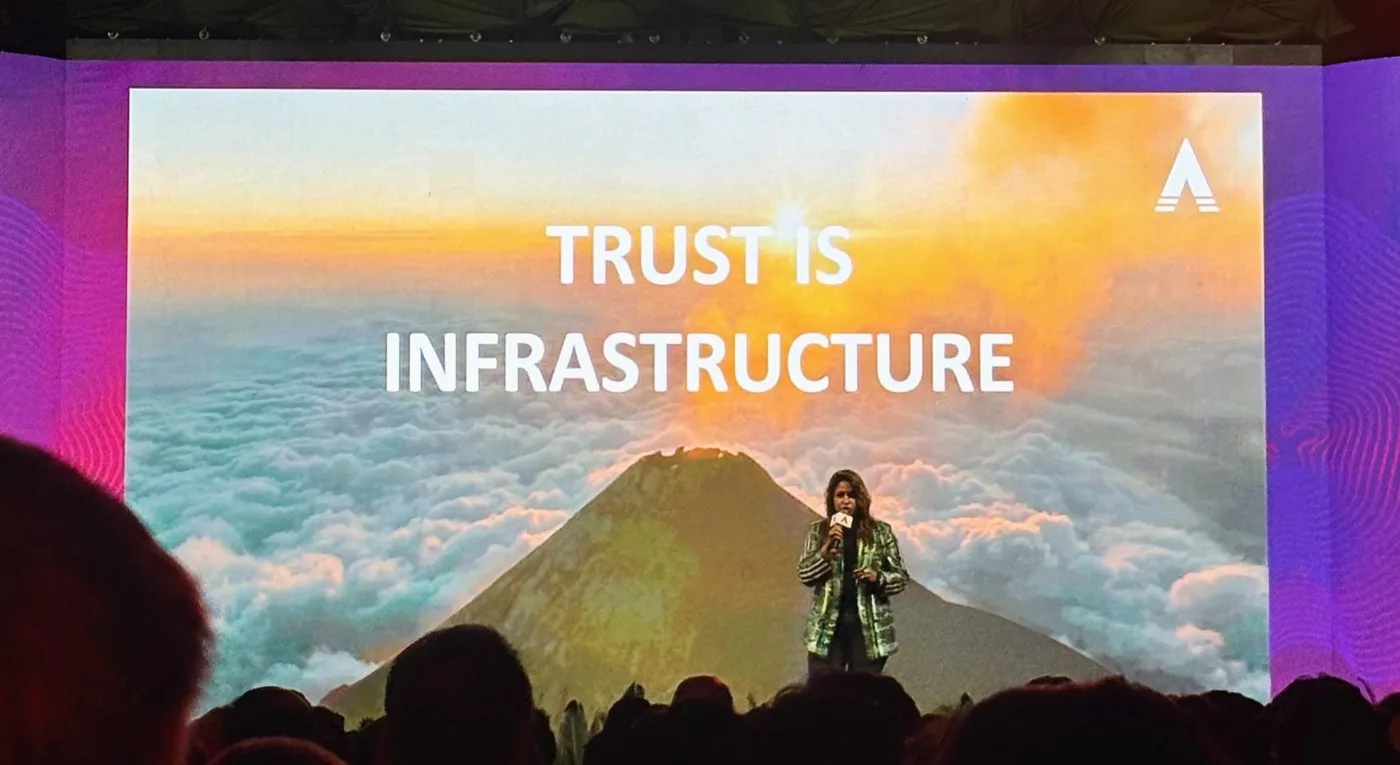
It makes sense. When capability becomes cheap, it stops being the advantage. Almost anyone can connect a model today. What is hard, and what separates an experiment from a real operation, is being able to trust that the model will do the right thing with your customers, your portfolio and your rules.
Trust has an enemy with a name
When an AI only converses, trusting it is easy, because it cannot do harm. The problem appears when it starts acting inside a real operation. There the fear stops being abstract and has a name: that it makes something up.
That it promises a customer a discount nobody authorised. That it cites a policy that does not exist. That it accepts a date or an amount it pulled out of nowhere. In a talk, a hallucination is an anecdote. In a financial operation, it is a liability and a broken relationship with your customer.
So the underlying question Volcano left behind is not «how smart is the AI?». It is «how do I know I can trust it?». And that trust has two sides.
First side: the technology
A Shimli agent is built not to invent, and that rests on two concrete things.
Limits it cannot cross. The agent operates inside a framework declared by the institution. It does not improvise policy, does not offer what is not authorised and, when it reaches the edge of what it can resolve, it does not guess: it stops and escalates the case to a person. Autonomy always lives inside that framework.
Its own knowledge. The agent answers from the real information of your business, your policies, your data and each customer’s history, not from what a generic model assumes. If the answer is not in what it knows, it does not invent one to get by. That, in practice, is what prevents hallucinations.
And because every decision and every action is recorded, trust is not an act of faith. You can see what the agent did, with what information and under which rule. It is trust you verify.
Second side: the team
Technology does not hold itself up. Behind every agent there are people who build it, supervise it and keep it current, and that is the other side of trust.
At Shimli the work is one of constant learning, with recurring advice from Meta, NVIDIA and AWS, and direct access to the providers of the models running in production. We are not guessing from the outside how this technology works: we are connected to those building it, and that judgement carries over to your operation. AI changes every week. Our job is that you do not have to chase it, but can trust that the team behind your agent already did.
Trusting an enterprise AI means, in the end, trusting both things at once: how it is built and who is building it.
This is not one sector’s problem
The pattern repeats in any operation with volume: a lender assessing credit, a credit union following up payments, a clinic with instalment plans, a retailer handling hundreds of conversations a day. In all of them, the question before letting AI act is the same: can I trust it not to invent anything, and that there is a serious team behind it?
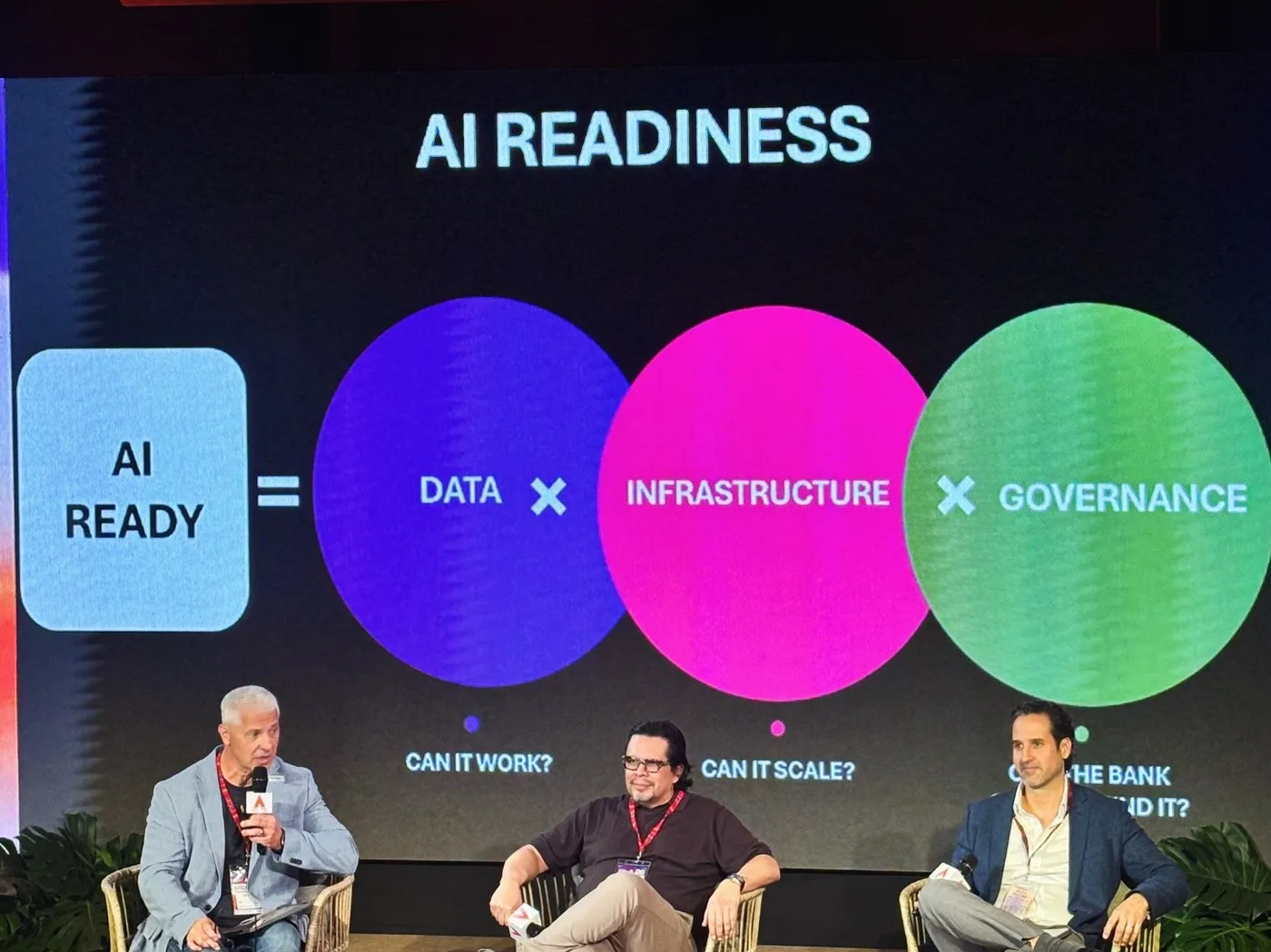
The advantage will not be having AI. It will be trusting it
Models will keep changing and almost everyone will have access to similar AI. When that happens, the advantage no longer sits in the technology, but in trusting it enough to let it really work inside your operation.
That trust is not declared. It is built with limits, with your own knowledge, with traceability and with a team that never stops learning. It is the least eye-catching part of AI, and the one that decides whether it enters your business or stays a demo.
Questions on this topic
- What stops an AI agent from inventing an answer?
- Two things working together. Declared limits, which prevent it from offering or asserting what is not authorised, and the institution's own knowledge, which makes it answer from its policies and its data instead of what a generic model assumes. When the answer is not in what it knows, the case escalates to a person rather than being resolved with a guess.
- How do you verify that an agent did the right thing?
- Every decision and every action is recorded: what it checked, which rule it acted under and where it handed the case over. That turns trust into something you review case by case, instead of something you accept on the vendor's word.